
The internet may have gotten a little ahead of itself on Jon Rahm.
Over the last few days, rumors have been flying that Rahm is preparing to leave LIV Golf and has already worked out some sort of deal to return to the PGA Tour.
The first part might eventually prove true.
The second part appears to be a much bigger stretch.
Golf Digest’s Joel Beall poured some cold water on the PGA Tour rumors yesterday:
“All Rahm smoke is coming from his camp. Tour already offered a reprieve and he (and DeChambeau and Smith) declined. Besides, Koepka wanted to return; Rahm + others asking only because LIV’s in trouble. Rolapp will not waste political capital re-extending immunity.”
That’s a pretty important distinction.
Rahm Leaving LIV Is Not The Same As Rahm Returning To The PGA Tour
There appears to be legitimate uncertainty surrounding Rahm’s future with LIV.
Last week, Reuters cited a Telegraph report saying LIV officials were “almost resigned” to Rahm leaving after this season. The report also said the DP World Tour was increasingly confident Rahm would play more events there next year.
Naturally, that sparked speculation that a PGA Tour return was next.
But there’s a problem.
The PGA Tour already gave Rahm that opportunity.
When Brooks Koepka returned earlier this year, the Tour created a time-sensitive pathway that was also offered to Rahm, Bryson DeChambeau and Cameron Smith.
Koepka took it.
The other three did not.
According to Beall, PGA Tour CEO Brian Rolapp isn’t particularly interested in reopening that door now simply because LIV’s situation has become considerably less comfortable.
And you can understand why.
There’s a big difference between Koepka approaching the Tour because he wanted to come back and LIV players looking for an exit once the league starts running into trouble.
So, What Happens Now?
Rahm could still leave LIV.
He could play significantly more on the DP World Tour.
And, eventually, he could absolutely find his way back onto the PGA Tour.
But as of right now, there does not appear to be some secret handshake agreement sending Rahm back to the Tour.
For now, the most accurate version of the story is much less exciting:
Jon Rahm’s future with LIV Golf looks increasingly uncertain. His return to the PGA Tour does not appear to be a done deal.
In other words, there’s smoke.
Just probably not from the fire everyone thought.
A mix of courtroom golf drama, rollback panic that may or may not matter, Anthony Kim doing Anthony Kim things, and Jim Furyk trying to rebuild the U.S. Ryder Cup machine before Ireland.
→ Tiger’s Prescription Records Are Staying Behind Closed Doors
Tiger Woods will have to turn over prescription records as part of the investigation into his March traffic crash, but the public won’t get to see them. A Florida judge ruled the records can be shared with a limited group tied to the case, not dumped into the public-records circus. So yes, the legal drama continues — just with fewer documents for everyone to screenshot. (defector.com)
→ Cameron Young Is Playing the Future Ball and Still Nuking It
Cameron Young is using a ball that would likely conform to the coming rollback rules, and the big punchline is that it has basically made zero difference. It was built to help him control spin, not necessarily to prepare for the rollback, and he’s still averaging the same 302.7 yards off the tee. If the plan was to scare bombers into submission, this probably isn’t the example the USGA wanted. (Golf Channel)
→ Anthony Kim Is Back in the Top 200 and Still Doesn’t Care What You Think
Anthony Kim shot a final-round 62 at LIV Golf Virginia, finished T6, helped win a team playoff, and climbed back into the OWGR top 200 for the first time in 14 years. Then he reminded everyone he is not exactly losing sleep over public opinion. The comeback is getting real — and AK is still very much AK. (Golf)
→ Jim Furyk Wants to Fix Team USA Before Team USA Breaks Again
Jim Furyk is already looking at how the U.S. Ryder Cup team gets built for 2027, and he sounds ready to mess with the formula. With money now warping basically everything in pro golf, Furyk doesn’t think earnings are the clean measuring stick they used to be. Expect simulations, tweaks, and probably the same six captain’s picks — because Team USA needs more than vibes if it wants to win in Ireland. (golfdigest.com)
It’s been a crazy week in the world of golf. PIF announced it would be pulling funding for LIV Golf at the end of the year, and there’s an internal scramble to keep it going, but everyone knows that the fat lady has already sung. Golf writers from many different publications have weighed in, and some of the articles are absolute scorchers.
Egotist Jon Rahm must shut up, pay up and play
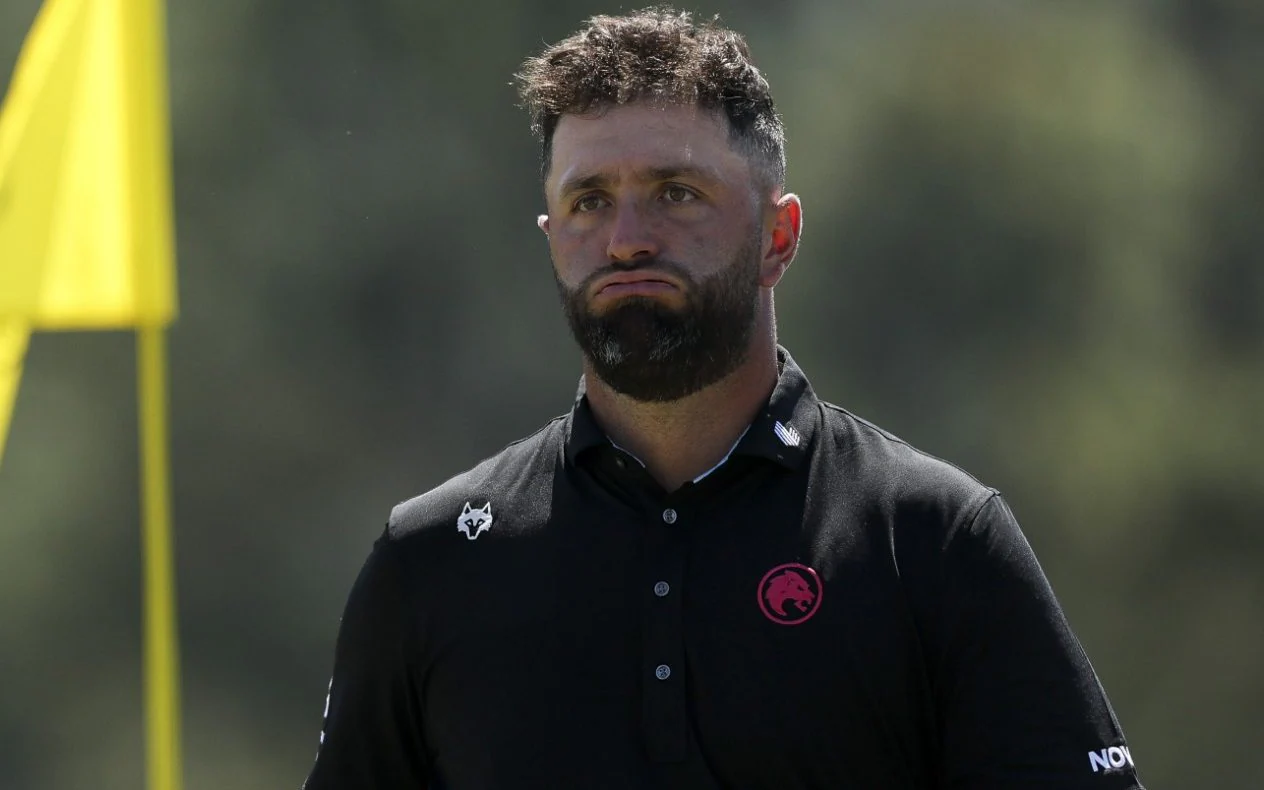
According to James Corrigan of The Telegraph, Jon Rahm’s next move is pretty simple: stop complaining, pay the fines, and play.
Corrigan’s larger point is that Rahm deserves no sympathy here. He took LIV’s money, knew there would be consequences, and now his short-term future depends on whether he’s willing to pay what he owes to keep playing where he wants to play. But the long-term stakes may be even bigger. If Rahm handles this poorly, there’s a real chance his career is remembered less for the titles he won and more for the insane amount of money he chose to prioritize.
Highlight Quote: “Shut up, pay up and play.”
As LIV flames out, let’s not forget those who were eager to sell golf to the Saudis
According to Eamon Lynch of Golfweek, LIV’s mess is not just on the players who took the checks. It’s also on the agents, executives, power brokers, toadies, and bootlickers around the game who were more than happy to help sell golf to the Saudis when the money was flowing.
Lynch takes aim at golf’s elite in this piece, and while he unfortunately stops short of naming names – so only golf insiders know exactly who he’s referring to – the message is pretty clear: a lot of people were willing to look the other way, cash the checks, and act like this was all just “growing the game.” Now that LIV appears to be running out of runway, none of them should get to quietly rewrite history.
Highlight Quote: “Like the guaranteed fees paid to players — Bryson DeChambeau expects his thirst to be slaked with a new contract soon — and $30 million purses for guys who couldn’t be identified as pro golfers in a two-man line-up if the other option was a corpse.”
A newsletter about golf
Join 145,000 golfers in our community.
For LIV Golfers, the party is over
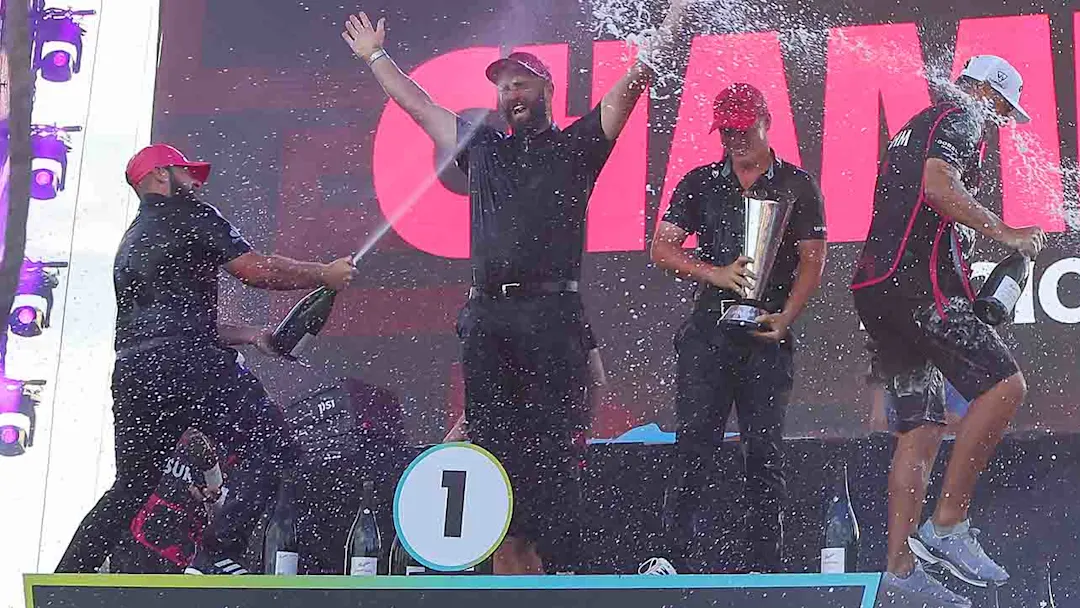
According to Michael Rosenberg of Sports Illustrated, LIV’s biggest problem may not be that the Saudi money is going away – it’s that the league might keep existing without it. Rosenberg argues that LIV’s entire model was built on endless cash, not actual business fundamentals. Now, with PIF pulling back and a new board trying to salvage whatever is left, the players may find themselves stuck in the worst possible version of LIV: less money, fewer options, and a league still trying to hold them to contracts. In other words, the fun part is over. The lawyers are up next.
Highlight Quote: “If O’Neil believes what he told employees, he is delusional. If he doesn’t believe it, he is a charlatan. Either way, he has the credibility of an 18-handicapper who says he will win next year’s Masters.”
Can LIV Golf work without the Saudi billions? Sports investors predict a ‘free fall’
According to Gabby Herzig of The Athletic, LIV’s next challenge is pretty simple: find someone else willing to pay for the most expensive golf experiment in history. With Saudi PIF reportedly out after 2026, LIV is trying to sell private investors on the idea that there’s still a real business here. The problem, of course, is that the league has never really proven it can generate the kind of revenue needed to support massive contracts, huge purses, and a global schedule. So the question becomes: is anyone really interested in LIV without the blank check?
Highlight Quote: “The math is never going to work.”
According to Andrew Beaton of The Wall Street Journal, Saudi Arabia’s Public Investment Fund is expected to stop funding LIV Golf after this season – a potential death blow to the league that spent billions trying to “disrupt” professional golf.
Notably, Yasir Al-Rumayan, the governor of the Saudi’s Public Investment Fund (PIF), has stepped down from his role as chairman of the league’s board.
This was his baby, and the move feels like a pretty good sign that things at LIV are coming to an end.
LIV, naturally, is framing things a little differently.
In its official statement, the league said it is moving from a “foundational launch phase” into a “diversified, multi-partner investment model,” with a new independent board led by Gene Davis and Jon Zinman.
Corporate Mumbo Jumbo Translation: LIV says it is not dead – it is looking for new money.
The problem is that new money may be hard to find at anything close to the scale LIV has been operating on. Huge player contracts, massive purses, and global events do not come cheap, and the league has been almost entirely powered by Saudi backing since launch.
So, reading between the lines on their bulls*t, corporate press release – they will be attempting to carry around LIV’s corpse, Weekend At Bernie’s style, while they try to convince the next investor that this thing is alive, despite having no pulse.
However, moments of desperation often lead to opportunity, and wow, what an opportunity the LIV stars have right now.
Now Bryson, Jon Rahm, Ian Poulter, and Lee Westwood have a chance to put their money where their mouths have been for the last few years.
If LIV was always about growing the game, building a global tour, and bringing golf to new markets, then surely they’ll be happy to keep doing exactly that for a lot less money.
After all, these guys have spent years positioning themselves as golf missionaries — traveling from country to country to spread the game they love. So why wouldn’t they continue the mission if the checks get smaller?
It was always about the golf, never the money.
Right?
Of course, not every LIV player will be so virtuous; there will be some who try to jump ship.
Patrick Reed took the smartest path back, and Brooks Koepka already returned through a one-time program that came with a major financial penalty, but the Tour has made it clear that won’t necessarily be the blueprint for everyone else.
“There were rules, and they were broken,” PGA Tour chief executive Brian Rolapp said before the PIF news on Wednesday. “With rules comes accountability.”
What will that accountability look like?
No one knows, but just like an irreverent 80’s comedy movie, it will be interesting to see how it all unfolds.
A mix of innovation, uncertainty, rebuilding, leadership decisions, and a reminder that the basics still win.
→ Old guy, new clubs
Justin Rose has played well this year, but now he’s taking a gamble – he’s the first pro to game McLaren’s new clubs. Will the risk be worth the reward?
→ LIV Golf players facing uncertain future
As uncertainty surrounds LIV Golf, players have been quietly putting feelers out there to figure out what their future might look like. Never a great sign.
→ Oakland Hills opens new clubhouse four years after fire
Oakland Hills Country Club is back. New clubhouse, fresh start, one of the game’s great venues back in business.
→ Why Jim Furyk was the only real option for U.S. Ryder Cup captain
Jim Furyk is a good pick. Not flashy, but experienced, respected, and about as steady as it gets. Sometimes that’s exactly what you need.
→ Si Woo Kim hit 71.75% of fairways – here’s what you can learn
Si Woo Kim keeps it simple – hit fairways, avoid mistakes, repeat. Not revolutionary, but it’ll probably help your game more than whatever swing thought you’re working on right now.
There’s a growing sense of uneasiness among LIV Golf players – and it’s not about their swings.
According to this report by Ben Parsons at Today’s Golfer, several LIV players are starting to realize that the long-term picture might not be as clear (or guaranteed) as it once seemed. Early deals came with massive upfront money, but as contracts begin to approach their expiration dates, questions are starting to surface.
The big one: what happens next?
Some players reportedly assumed renewals or ongoing opportunities would be automatic. Now, there’s growing awareness that future deals could be more performance-based – or not come at all. That’s a pretty stark shift from the “guaranteed money forever” narrative that helped launch the league.
There’s also the broader issue of LIV’s place in the golf ecosystem. With ongoing negotiations involving the PGA Tour, DP World Tour, and Saudi backers, the future structure of pro golf is still very much in flux. Until that gets sorted, LIV players are stuck in a bit of a holding pattern.
For now, the money’s still good. But for the first time, it sounds like some LIV guys are starting to think about what happens when it isn’t.
The New York Post didn’t mince words after the 2026 Masters: LIV Golf has softened its players. The argument isn’t new, but Augusta provided the latest — and perhaps most compelling — evidence yet.
Several of the biggest LIV names arrived at Augusta with fanfare and left quietly, unable to contend on a course that demands the kind of sharpness that only comes from consistently competing against the world’s best. The limited schedule, the team format, the lack of cuts in many events — it all adds up, and Augusta exposed it.
The piece stops short of calling LIV a career killer, but the implication is clear: the competitive edge that made these players household names is eroding. Whether that’s reversible — and whether anyone in the LIV ecosystem is willing to admit it — remains to be seen.
Sergio Garcia has never been shy about wearing his emotions on his sleeve, but his Sunday at Augusta took things to a new level. After a rough final round at the 2026 Masters, Garcia reportedly damaged a tee box and snapped his driver in a fit of frustration — earning himself a formal reprimand from tournament officials in the process.
According to Golf Digest, Garcia’s outburst came during the back nine as his Masters hopes slipped away. The incident drew attention not just for the equipment damage, but for the optics of a former major champion unraveling on one of golf’s most hallowed grounds. It’s the kind of moment that tends to follow a player for a while.
Garcia has had a complicated relationship with Augusta over the years — a Masters win in 2017, plenty of heartbreak before that, and now this. Whether it’s a one-off frustration or a sign of deeper struggles since joining LIV Golf, it’s worth watching how the tour and his peers respond.


