Wyndham Clark played his first 36 holes at the BMW Championship without making a bogey, shooting 64 both days.
In the third round, he doubled the first hole—and then played the remaining 17 holes in 7-under to shoot 65.
He still almost blew it on Sunday.
How? By making three bogeys in his first 10 holes.
After all that good golf through the first three rounds, Clark watched his five-stroke lead disappear.
Poof. Gone.
And just like at the U.S. Open at Shinnecock, the crowd seemed pretty happy to see it happen. They were certainly favoring Rory McIlroy, who caught Clark midway through the final round.
Clark stepped onto the 16th tee tied with Rory. He hadn’t made a birdie all day, and the odds were against him—the 232-yard par-3 had yielded just five birdies all round.
Then he made his best swing and his best putting stroke of the day, rolling in a birdie to regain the lead.
He went on to birdie the 17th and 18th as well, ultimately winning by three strokes over Patrick Cantlay after McIlroy faltered with a bogey on the 17th.
The BMW Championship was Clark’s third victory of the season. He’s officially a lock for the Presidents Cup team—and firmly in the Player of the Year conversation.
Player of the Year?
Wyndham Clark has an argument.
He’s won three times this season, including a major championship.
Matt Fitzpatrick and Chris Gotterup have also won three times, but neither won a major.
Scottie Scheffler has the best statistical résumé and two victories, but he didn’t win a major this season.
So, what matters more: the best golf over the full season or three victories with a major?
What’s Next?
The TOUR Championship at East Lake.
TOUR Championship Odds
- Scottie Scheffler: +300
- Rory McIlroy: +850
- Ludvig Åberg: +1400
- Wyndham Clark: +1400
- Xander Schauffele: +1400
- Patrick Cantlay: +1600
- Sam Burns: +1600
- Tommy Fleetwood: +1600
- Cam Young: +1800
- Chris Gotterup: +1800
- Collin Morikawa: +1800
- Matt Fitzpatrick: +2000
For the third week in a row, an American under the age of 25 has won on the PGA TOUR.
Has that ever happened before?
It turns out that yes, it has—but only once.
Way back in 2017, Jordan Spieth, Xander Schauffele, Bryson DeChambeau, and Grayson Murray actually made it four weeks in a row.
Murray won the Barbasol Championship, which was played as an opposite-field event during The Open.
That group has gone on to collect seven major championships so far.
Maybe we should start sprinkling a few futures on Jackson Koivun, Michael Thorbjornsen, and Michael Brennan while we still can.
The Wyndham Championship
There must be something in the water at PGA TOUR U, because these kids are making birdies in bunches.
Yesterday, Michael Brennan made five birdies in a row on Nos. 4-8.
That stretch separated him from Beau Hossler, his closest pursuer, and combined with the 63 he shot on Saturday, it was enough to win him the tournament.
Brennan went on to birdie the 72nd hole and win by three strokes.
In the process, he vaulted himself inside the FedExCup top 50.
He was the only player to move into the top 50 from outside the bubble.
Jackson Koivun, who started the week at No. 70, remained there.
Brooks Koepka, Jason Day, and Keegan Bradley saw their seasons come to an end.
What’s Next?
The FedExCup Playoffs kick off this week with the FedEx St. Jude Championship at TPC Southwind.
FedEx St. Jude Championship Odds
- Scottie Scheffler: +450
- Rory McIlroy: +1200
- Xander Schauffele: +1800
- Sam Burns: +2000
- Tommy Fleetwood: +2000
- Cam Young: +2200
- Ludvig Åberg: +2200
- Matt Fitzpatrick: +2200
- Collin Morikawa: +2500
- Hideki Matsuyama: +2800
- Chris Gotterup: +3000
- Patrick Cantlay: +3000
- Viktor Hovland: +3000
I’ll admit, I was starting to question whether or not Tom Kim was worthy of the hype he’s received.
Afterall, sports fans and sports media tend to get enraptured with people like Tom Kim – he’s immensely talented, has a wonderful and outgoing personality, and he’s incredibly young – just 24 years old.
He turned pro at 15, racked up 3 professional wins before most of the kids his age had a college diploma, and then he went the last three straight years without a win.
It was fair to wonder if the lavish praise and hearty approbation was unearned.
Then, this weekend, he put all those talents on display, and reminded everyone that his ceiling is just as high as any other young player on TOUR.
Tom Kim 4-iron to 5 FEET to go up two.
Golf shot. pic.twitter.com/5xpoYZ9KRO
— Fore Play (@ForePlayPod) July 12, 2026
The final round started with a bit of a logjam – Matt Fitzpatrick and Michael Thorbjornsen briefly held a share of the lead, but five birdies in the first 12 holes gave Kim some cushion.
Min Woo Lee briefly got the lead to within one stroke, until TK hit that 4i in the video above and made birdie on the 16th. Lee ultimately finished in solo 2nd place.
Kim made only a single bogey in his final 51 holes of the tournament, that’s almost three straight rounds without a bogey, for the mathematicians out there.
He now has 4 wins before the age of 25, the only non-Americans on that list are Rory McIlroy, Sergio Garcia, and Hideki Matsuyama. Good company.
This Guy Won More Than Tom Kim
What kind of psychopath bets $48,000 on at 84/1 bet? People are insane.
A bettor at DraftKings put $47,700 on Tom Kim to win the Scottish Open at 84/1…
They won $4,006,800
Tom Kim’s prize for winning the Scottish Open was $2.4M LESS than that payout ($1.575M) 🤯
(via @DKInsights_) pic.twitter.com/AbYD5RanFD
— Covers (@Covers) July 12, 2026
What’s Next?
The 154th Open Championship.
154th Open Championship Odds:
-
Scottie Scheffler (+620)
-
Rory McIlroy (+770)
-
Jon Rahm (+1700)
-
Matt Fitzpatrick (+1950)
-
Tommy Fleetwood (+2050)
-
Xander Schauffele (+2400)
-
Chris Gotterup (+2800)
-
Cameron Young (+2900)
-
Ludvig Åberg (+3100)
-
Collin Morikawa (+3100)
We’ve got a fog delay in Scotland on Saturday morning.
The first few players off got a few holes in, and then they called it. Here’s how the PGA Tour describes the weather on their site:
A cold front moving down from northwest Scotland overnight brought rain and fog as play began Saturday morning at The Renaissance Club. Rain was expected to become heavy briefly at 11 a.m. and taper around 1 p.m. The fog was expected to remain, but weaken throughout the day. When play was suspended, only 17 players were on the golf course.
The conditions are known as haar, a cold, wet sea fog or mist that frequently rolls in from the North Sea onto the eastern coast of Scotland and northern England.
Now we all know the word “haar”.
When the fog lifts, those who made the cut will be chasing a three-way tie at the top of the leaderboard, held by Rory McIlroy, Tom Kim, and Jordan Smith at nine-under.
In all, there are 12 players within two shots of the lead – and 37 within five.
Several big names missed the cut this week; Scottie Scheffler, Ludvig Aberg, Brooks Koepka, Patrick Cantlay, and Xander Schauffele among them.
Who’s Chasing?
-8 M Fitzpatrick, MW Lee; –7 C Gotterup, R MacIntyre; –6 N Hojgaard, W Clark; -5 P Reed; -4 J. Thomas
Full Leaderboard & Tee Times Here
How To Watch The Action This Weekend
-
Saturday-Sunday: 10 a.m.-noon (Golf Channel); noon-3 p.m. (CBS)
Does putting a line on your golf ball help you make more putts?
Ask Brad Faxon.
According to Titleist, Faxon was one of the first Tour players to draw a line on his golf ball back in the day. The idea was simple: give yourself a clearer visual target, aim the ball more consistently, and start more putts on the line you actually picked.
“Titleist Brand Ambassador Brad Faxon is credited with being the first tour player to hand-draw a line on his golf ball. Brad marked a straight line on his Titleist to help him aim the ball, orient his putter face and body lines correctly and get his ball started on the correct line. This practice helped Brad to become one of, if not the best putter on the planet.”
Seems like it worked for him.
But what about the rest of us?
That’s where things get interesting. Some golfers swear a line on the ball instantly improves their aim. Others think it’s distracting, slow, or just another gimmick. Meanwhile, golf ball companies have gone all-in on alignment tech, from Callaway Triple Track to Titleist’s new AIM models to Wilson, Srixon, Vice, and more.
So, does the line actually help?
Here’s the five-minute version covering what golfers are arguing about on Reddit, X, YouTube, and at the range.
Callaway Triple Track Still Runs The Show

The OG.
Callaway’s Triple Track system is still the most recognizable alignment-ball setup in golf. You’ll find it on the Chrome Tour, Chrome Soft, ERC Soft, and newer 360° versions.
The appeal is obvious: instead of guessing whether your ball is aimed correctly, you get three bold lines designed to frame your target and help you square the putter face.
Golfers use it for more than putting, too. Plenty of players line it up on tee shots to help commit to a start line before pulling the trigger.
Why golfers like it:
- Easy to see behind the ball
- Helps with putter-face alignment
- Works on putts and tee shots
- Built into premium Callaway models
MyGolfSpy’s 2025 ball test and Today’s Golfer’s robot testing both reinforced the bigger point: alignment tech does not need to come with a meaningful performance penalty. If you like the visual, there’s not much downside.
Check out Callaway Triple Track here.
Titleist Finally Said, “Fine, We’ll Play”
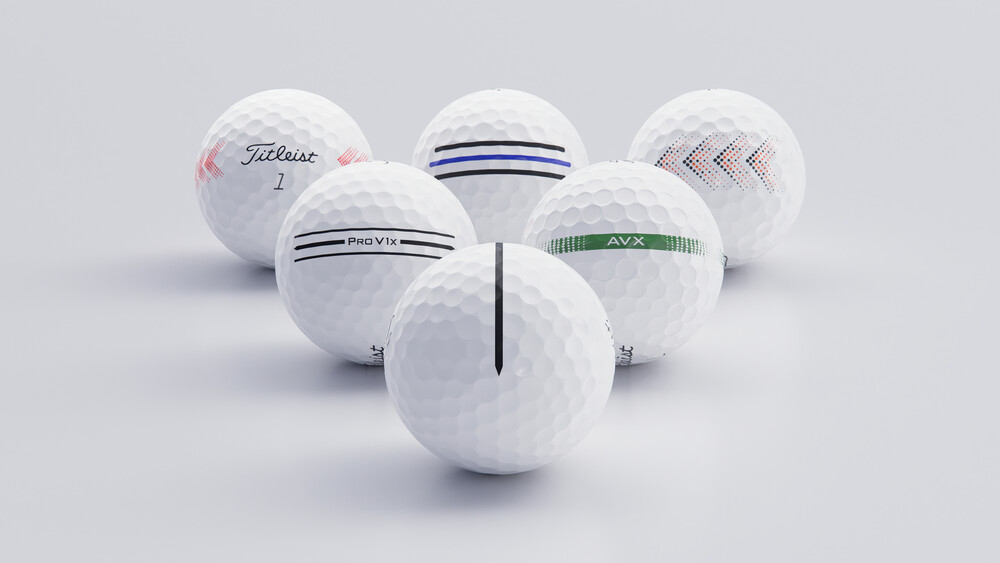
For years, Titleist players had two choices: play a clean Pro V1 or grab a Sharpie and draw the line yourself.
That has changed.
Their full lineup is now available with factory Performance Alignment markings, including the newer Enhanced Alignment version.
It’s a more subtle look than Triple Track, but that’s exactly why a lot of Titleist players like it. You get the clean Pro V1 feel with just enough help when you’re standing over a six-footer.
Why golfers like it:
- Cleaner look than louder alignment balls
- No Sharpie or stencil needed
- Available on Pro V1 and Pro V1x
- Feels familiar for longtime Titleist players
Titleist held out for a while, but the message is clear now: alignment balls are no longer just a niche thing.
Explore Titleist Golf Balls Here
Everyone Else Is In The Mix
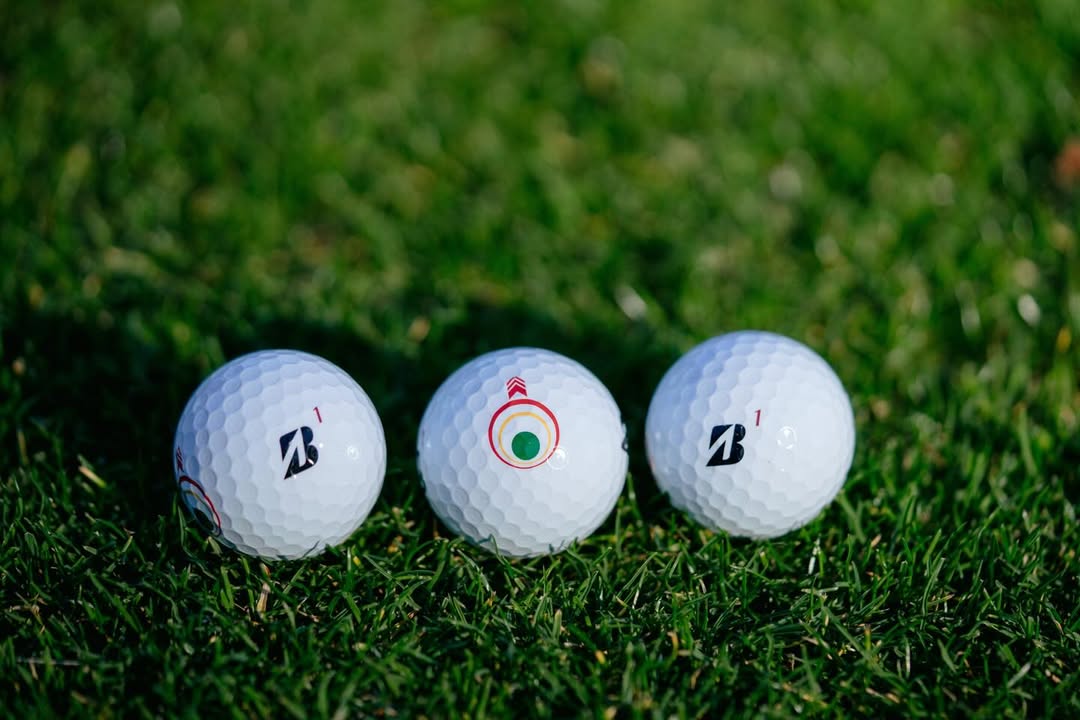
Callaway and Titleist get most of the attention, but they are not the only brands leaning into alignment.
Bridgestone Mindset: These balls have won on TOUR twice already in 2026.
Wilson Triad: The newer Triad models have picked up attention for combining alignment help with strong balance and performance. Golfalot and plenty of social media golfers have called it one of the surprise performers.
Srixon Q-Star: Srixon’s visual alignment options give golfers a bolder look without going full Triple Track.
Vice Tracer: Vice Tracer balls have become popular with golfers who want bright alignment markings that are easy to see over the ball.
In other words, you’re not stuck with one brand or one look anymore. Whether you want loud, subtle, colorful, or clean, there’s probably an alignment ball that fits your eye.
The Great Reddit And X Debate
This is where the line-on-the-ball conversation gets messy.
Some golfers say it immediately helps them aim better. They feel more confident, make a better stroke, and stop second-guessing whether the putter face is pointed where they think it is.
Others hate it.
They say it takes too long to line up, looks distracting at address, or makes them obsess over aim instead of speed. A few golfers try it for a round, get annoyed, and go right back to a plain white ball.
The split usually comes down to one thing: do you struggle with aim?
If you do, a line can help. If you already aim well and prefer a cleaner look, you may not notice much benefit.
Bottom line: if your start line is a problem, the line is worth trying. If your speed control is the real issue, no alignment marking is going to magically fix that.
So, Does A Line On Your Golf Ball Actually Help?
For a lot of golfers, yes.
Not because the line makes the ball roll better. Not because it turns a bad stroke into a good one. And definitely not because it guarantees you’re suddenly going to become Brad Faxon.
It helps because it gives your eyes a simple reference point.
When you line the ball up with your intended start line, you can step in, set the putter face, and make a stroke with a little more confidence. That matters, especially on short and mid-range putts where doubt can wreck you before the putter even moves.
The line can also expose a problem. If the ball looks aimed correctly from behind but wrong when you stand over it, that tells you something about your setup, eyes, posture, or perception.
That alone can be useful.
For Titleist this is a foregone conclusion.
The findings were undeniable. The results of the test showed that players were consistently up to 35% more precise in aligning their putts when they used an AIM product.
This is me.
When I was in my 20s, I got really lucky.
I started a business with some buddies. We were in the right place, at the right time, with the right product.
It changed my life.
We built that business to about $10 million in revenue. We paid ourselves real salaries. And we went through everything that comes with it – mistakes, losses, firings, resignations, lawsuits. The whole deal.
I won’t bore you with all of it, but three things happened during that stretch:
- I learned a hell of a lot
- My wife got pregnant with our first daughter (we now have two)
- And somewhere in there, I fell in love with golf
Around that time, my wife suggested we move from Austin back to Pennsylvania, where we both grew up, and where most of our family still lives.
I didn’t want to go.
But sometimes, when you’re married, you disagree and commit anyway. That’s what being a good teammate looks like.
Take notes, fellas.
Anyway, we moved back in 2022, and she was right – it was the best decision we could’ve made for our family. There’s nothing better than raising your kids around people who love them.
If you’re reading this, please send it to my wife so she knows I publicly admitted she was right and I was wrong. Thank you for your time.
I’d love to say that was the only time I’ve been wrong, but I made a few more mistakes in that stretch – and somehow, they all led to Caddyshanks.
Where I Got It Wrong
Moving wasn’t the only major life event happening at that time.
Within a pretty short window, I:
- Walked away from the business I had spent most of my 20s building
- Sold our house in Austin (after a failed Airbnb attempt)
- Had our first child
- Bought two small golf businesses with my brother Jesse and my friend Jon
If you take nothing else from this article, take this:
Do not stack every major life decision on top of each other.
Because I did.
And I wildly overestimated myself.
The two businesses we bought were easiergolfing.com and bodyforgolf.com.
Easier Golfing sold a swing trainer called The PowerFlex. Body For Golf sold a few fitness E-books, which we still sell today.
At the time of purchase, the two businesses combined for about $25,000 per month in revenue – most of it coming from the PowerFlex.
There were thousands of positive reviews. We were working on bringing shipping in-house to improve margins. Everything looked stable.
I felt like a genius.
I had analyzed search volume, spotted a trend, and thought I was skating to where the puck was going.
Then reality hit.
Within a few months, Amazon released an Amazon Basics version of the PowerFlex.
Same concept. Lower price. Infinite distribution.
Overnight, our sales cratered.
We couldn’t compete and I was reeling.
I had walked away from a comfortable salary. I was living off buyout money. We had a newborn at home.
And the business I had just convinced my brother and one of my best friends to buy with me… got crushed almost immediately. (By the way, we still have about 1,000 swing trainers sitting in Jon’s garage if you want one.)
The Pivot
But there was one piece of the business that didn’t break.
The newsletter.
When we bought the sites, they came with a small email list – a few thousand subscribers. Over time, we had learned how to sell ads to brands trying to reach a golf audience.
It wasn’t much. A few hundred bucks a month, but it was profitable.
And more importantly, it was ours, and not something that Amazon, or others, could easily replicate.
So we leaned into it and slowly, it started to grow.
Not enough to pay a salary. Not even close. But some advertising dollars were rolling in. Enough to cover its costs. Enough to keep going.
For a long time, I wrote and sent the newsletter 3x per week to almost no one.
There was just one problem – I couldn’t work on something that made no money forever, no matter how much I enjoyed it.
So we did what a lot of people in that situation do.
We started something else.
We launched a marketing agency. We started another newsletter. We pieced things together.
It wasn’t glamorous, and it wasn’t clean, but things were starting to work.
Where We’re At Now
Fast forward to today.
We run a marketing agency called That’s Crisp. We help clients – mostly in sports – create content, grow their audiences, and build their brands.
Last week, we were credentialed media at the JM Eagle LA Championship, an LPGA event, with one of our clients.
That was a bit of a “holy sh*t” moment for our small team. We got to meet great people, shoot content, and be inside the ropes at a professional golf tournament – not something I saw coming a few years ago.
We also own two media brands:
Caddyshanks, for golf, and Dad Day, for dads.
You can check out our deck for the two media brands here, if you’re interested.
I’ve written Caddyshanks three times a week, every week, for over three years now. I love it – it doesn’t feel like work. I get to talk about golf, make picks, tell stories, and try to figure out how to deliver as much value as possible to people who care about the game as much as I do.
On the other side, Adam Kunes has been the driving force behind Dad Day. We’re really proud of what that’s become – a private Slack community for dads, real-world run clubs and events, and now a YouTube channel focused on telling the stories of great dads.
In a few weeks, we’ll be launching a Caddyshanks YouTube channel as well, with some crossover episodes highlighting dads in the golf world.
It’s funny – a couple years ago, I thought the big win was buying those golf businesses. Now, the best parts of what we do are the things that don’t feel like work at all, and through a series of happy accidents, we’ve ended up with with a real business.
And for the first time since all of this started a few years ago, it looks like I might even be able to take a small salary this year.
If you made it this far, I appreciate you reading. If you ever want to connect, shoot me a note – josey@caddyshanks.co
When young athletes accomplish something amazing and are quickly plucked from their local community and plopped onto the world stage, the expectations are understandably enormous. How could they not be?
Here’s an example. A 10-year-old girl from Hawaii qualifies for the 2000 U.S. Women’s Amateur Public Links and then shoots 74-76 to advance to match play. She makes it to the third round the next year, then the semifinals the next, until she knocks out all adversaries to win the darn thing in 2003 and become the youngest champion in the history of the USGA at age 13.
Oh, and just a month earlier, she took advantage of a sponsor exemption and shot 66 on moving day at the LPGA Tour’s Kraft Nabisco Championship to move into the final group of the day on Sunday. In a major championship. At 13 years old. When her eighth grade classmates were on spring break. Wow!
Seven months later, she shot a second-round 68 at the Sony Open. On the PGA Tour. Double wow!
And although she missed the cut by a shot, she beat some big names that week: Scott Hoch, Craig Stadler, Adam Scott, John Cook, and Zach Johnson. And many more.
So by the time she became a teenager, it’s natural that the expectations for Michelle Wie West were wild. As previously posed, how could they not be after all she’d done at such a young age?
But all too often a player, no matter the skill, no matter the sport, heck no matter the profession (child actors?), the dramatic rise levels off. For whatever reason, it just does. For all but a very, very, very select few anyway.
But Wie West was still on her ascent at this point in time. She turned pro in the fall of 2005 at age 16, and had a strong rookie season in 2006, recording three top-five finishes in major championships. Three!
And then came a bit of a backtrack. Wie West struggled to keep the momentum she’d built as a rising star through 2008.
Then, she won the limited-field Lorena Ochoa Invitational in 2009, and she won again at the Canadian Women’s Open in 2010 before various long-term injuries led to another slide.
But Wie West is a fighter and she climbed back to the top in emphatic fashion at the start of 2014 with a T2 at the first major of the season at the Chevron Championship (nee Kraft Nabisco) down in Houston, followed by a win two weeks later at the LOTTE Championship, then four top-10s in a five-week stretch before a dramatic culmination and crowning achievement at the U.S. Women’s Open at the famed Pinehurst No. 2.
Wie West was a major champion, 14 lightspeed years after teeing it up in her first big event at 10 years old. And while she only won once more, at the HSBC Women’s World Championship in 2018, she has undoubtedly won in life. Apologies if that sounds cheesy, but watch and listen as she talks about her family and her position in the game and it’s easy to see it’s true.
Wie West gained major sponsorships after turning professional, most notably from Nike and Sony, conducted herself with grace and poise at all times while representing those worldwide brands, and was inarguably worth every penny. She did things the right way, even when skeptics squawked about her playing in too many men’s events, and naysayers knocked her for failing to meet expectations on the golf course.
Wie West didn’t win 10 majors or 20 tour events. Those are facts. But she served as a wonderful ambassador for the game of golf throughout her career. And even after she married Jonnie West, son of NBA legend Jerry West, in 2019 and became a mother in 2020, Wie West recognized that while her full-time playing career had more or less come to a close, she could still use her clout and charisma to continue to advance the game.
She joined Mizuho, a powerful worldwide financial institution, to spearhead a new LPGA Tour event in 2023 that features LPGA Tour players and the AJGA’s best competing simultaneously for separate trophies.
“The genesis of this event really came from my history of being a junior golfer and kind of my trajectory,” she said. “We wanted to create a space for juniors to experience being a pro for one week, playing with the best of the best, having the juniors compare their golf game to the pros that they’re playing with on the weekend.”
Add in an iconic venue in Liberty National Golf Club with jaw-dropping views of both the Statue of Liberty and the New York City skyline and success was sure to come. And it did.
Decorated amateur player Rose Zhang won the inaugural event in her professional debut, in a sudden-death playoff no less. Yana Wilson, the 2022 U.S. Girls’ Junior champ, won the AJGA event that first year. Wilson, an LPGA Tour rookie in 2026, will be in this year’s field.
Nelly Korda followed Zhang in 2024, and Gianna Clemente, another talented and decorated junior, won the AJGA amateur event. Atthaya Thitikul took last year’s Mizuho Americas Open win and turned it into a trifecta of season-ending awards: player of the year, leading money winner and Vare Trophy champ for lowest scoring average.
Wie West, who has served as tournament host each year, made the first of what are sure to be many headlines surrounding the event Tuesday when she revealed that she has accepted a sponsor exemption to compete this year and serve as playing host.
“One of the privileges that comes with being the host of the Mizuho Americas Open is that I, along with Mizuho and the tournament team, review the potential golfers that could fulfill our sponsor exemptions that we add to our field,” said Wie West.
“When I was presented with the idea for me to play, I couldn’t think of a better time to return to the course and compete with the world’s best golfers, as well as have the opportunity to play alongside the top AJGA (American Junior Golf Association) girls.”
Wie West will also compete in this year’s U.S. Women’s Open at Riviera Country Club.
The Mizuho Americas Open is scheduled for May 7-10 at Mountain Ridge Country Club in West Caldwell, N.J., roughly 20 miles west of New York City. The historic club features a dramatic Donald-Ross designed golf course highlighted by expansive, intriguing greens and a great mix of short and long holes. Mountain Ridge C.C. will host the tournament again in 2027 before the event heads back to Liberty National G.C. in 2028.
Tickets are available at www.
The first three rounds of the Mizuho Americas Open will be featured on Golf Channel and the final round will be televised on CBS. More information is available at MizuhoAmericasOpen.
The Mizuho Americas Open is a purpose-driven tournament on the LPGA Tour. As title sponsor, Mizuho Americas created and drove the vision for a distinctive and premium event that celebrates women and advances the next generation, with a charitable focus on providing leadership and life skills to young girls from low-income communities.
“I think it’s really inspiring to be around other women who are driven, who work hard … it’s one thing to watch your idols on T.V., it’s another thing to watch them in person, but it’s a whole other thing to be inside the ropes with them, competing alongside them. From the young ladies who come to the [Mizuho] DrivHer Summit, there’s a lot of talk about leadership, taking control of what you can do, putting in the work. We talk a lot about work ethic and believing in yourself, networking, asking the right questions, and this is why the mentorship program is so special this week for the juniors and the pros. We want to make that connection.”
“We just really want this week to be a week of mentorship,” Wie West later added. “a week where juniors really throw themselves into the process and just learn a lot. I want them to soak as much up as they can over the week.”
I’m pretty sure I’ve said this the last two years, but the RBC Heritage really is a great comedown from The Masters.
Especially since the PGA TOUR awarded it Signature Event status, which means it draws a strong field.
This year, that field includes all qualified players with the exception of Rory McIlroy, who’s probably still celebrating his second green jacket, and Hideki Matsuyama.
Beyond the field, the course at Harbour Town Golf Links is narrow, with some of the smallest greens on TOUR.
This is not a bombers course, but one that demands accuracy off the tee and on approach. It’s a different setup than a lot of the courses we see on TOUR these days.
And hey, if you didn’t win the green jacket last week…
There’s always the plaid one.
Field Notes
-
Tighter scoring = fewer blowups, more clustering
Last year, the field stayed bunched – it was harder for longshots to separate, easier for steady players to hang around. Lean toward consistent ball-strikers over volatile scorers. -
Approach play decided everything
SG: APP drove the largest share of scoring variance (~38%). That’s your edge – prioritize elite iron players over hot putters or OTT merchants this week. -
Accuracy > distance (by a lot)
Harbour Town strongly favored accurate drivers, and 2025 leaned even more that way. Downgrade bombers, upgrade fairway finders who keep it in play and give themselves clean looks into greens.
The Details

Previous Winners
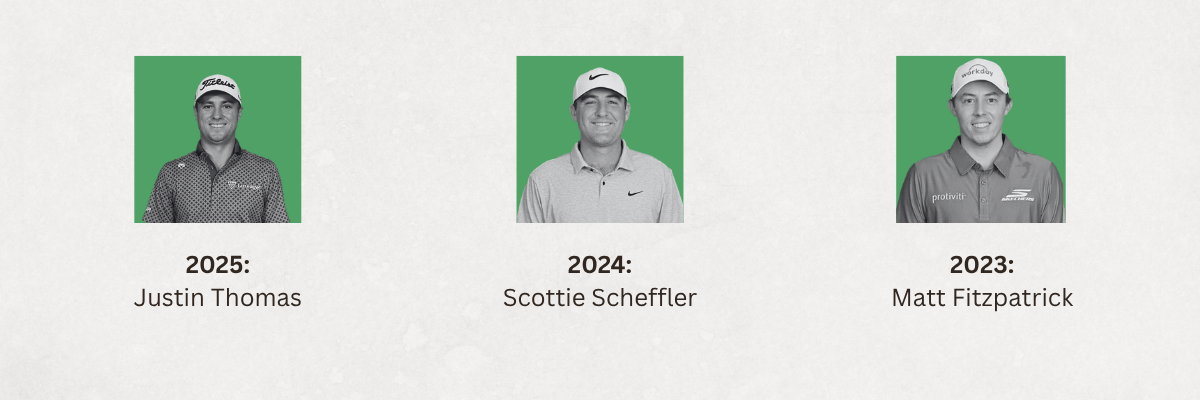
How To Watch
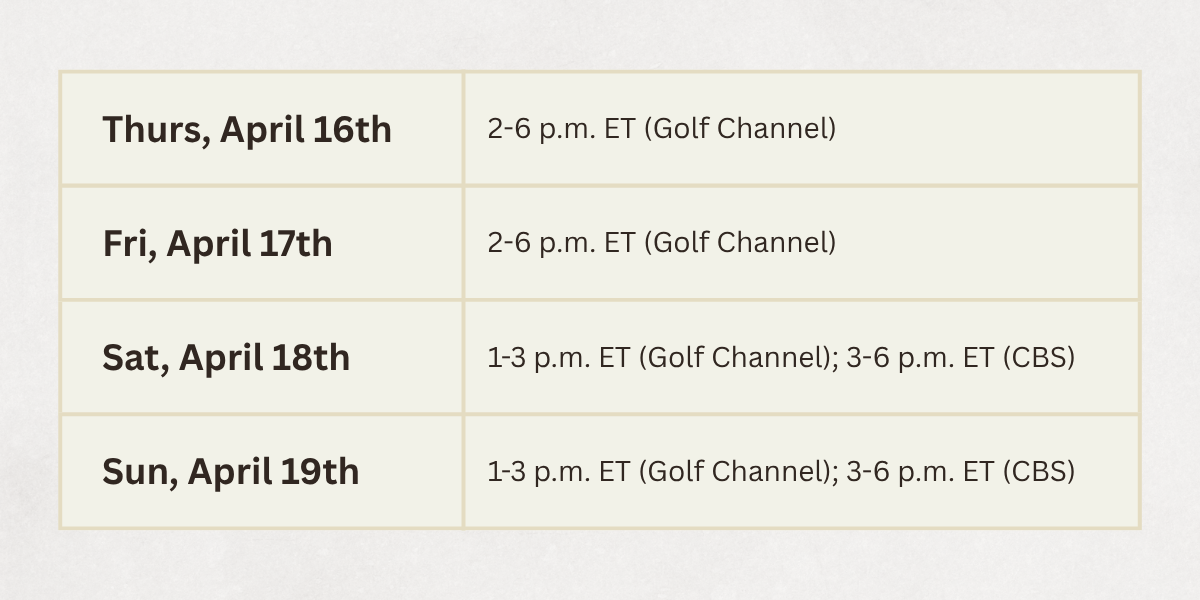
Featured Groups:
ESPN+ has announced featured groups for Thursday & Friday.
Weekly Bets: The RBC Heritage
We’ve partnered with Keith Stewart at Read The Line to share his weekly golf betting picks with the Caddyshanks crew. If you’re the type who enjoys breaking down matchups, spotting trends, and hunting for value, you’ll feel right at home in the RTL community. Join Here.
Keith Stewart’s Picks
Cameron Young (+1800 DraftKings)
In his last three starts, Cameron Young has finished seventh, third, won THE PLAYERS, and third at The Masters. The first time Young saw Harbour Town, Cameron finished third in 2022. Young is top 10 in the field for approach, par 4 scoring, and BoB%. His driver is an absolute weapon on this golf course. The disappointment from Sunday at The Masters fuels his second win in a month.
Sahith Theegala (+8800 DraftKings)
I love Sahith Theegala on Pete Dye designs. The talented Theegala has proven he understands Pete’s tricks. Eighth at The American Express (Dye) in January and tenth in his last start at Houston, Sahith has two top 5s in four starts at Harbour Town. The trending Theegala has a ton of value at nearly 90-1!
Caddyshanks Picks
Tommy Fleetwood (+1800 Draftkings)
I wish the number was a little bit longer for Tommy Lad here, but his game fits the course well, and I think his 2nd PGA TOUR win will come a lot sooner than the first.
Jason Day (+4800 Draftkings)
Small greens usually mean missed greens. Jason Day has gained strokes around the green in his last five events. Betting guys with good short game is the play this week.
Scottie Scheffler (+380 Draftkings)
The iron play showed some signs of life at Augusta, if that was more than just an illusion, Scottie could start heating up at just the right time – I still think he completes the career Grand Slam this year.
A political battle is playing out on public fairways in Washington, D.C. — and golfers are not happy about it. CNN reports that the Trump administration has moved to take over several public golf courses in the area, with at least one course reportedly being converted into part of the White House East Wing expansion, leaving it essentially unusable.
Local golfers and advocates have pushed back hard, arguing that these are public spaces that have served communities for decades. The courses in question are some of the few affordable public options in the region, and their potential loss has sparked real anger among everyday players who don’t have access to private clubs.
It’s a story that sits at a strange intersection of politics and the game — and a reminder that golf isn’t always played on manicured private grounds. Sometimes it’s a public park, and sometimes that park becomes a political flashpoint.
It’s really hard to write this article without doing my world famous impression of Frances McDormand in Fargo. But I’m gonna do my best. Brainerd is Minnesota’s premier golf mecca. A region packed with over 450 holes across dozens of top-rated courses, framed by pristine lakes, dense pine forests, rolling terrain, and that classic “up north” Northwoods escape feel. Home to legendary resort layouts from designers like Arnold Palmer, Robert Trent Jones Jr., Tom Lehman, and more, it’s a stay-and-play paradise with Gull Lake views, family resorts, and endless multi-course options.
Quick Facts
- Hundreds of holes in close proximity, many world-class public/resort courses within short drives
- Northwoods charm: Tree lined fairways, water hazards, elevation changes, and wildlife-filled settings
- Seasonal play: Mid-April/May to October; peak summer/fall for long days, mild temps (60s-80s°F), and prime conditions
- Variety for all: From championship tests to forgiving resort tracks and short courses; stay-and-play packages abundant
- Top-ranked gems: Multiple courses in Golf Digest/Golfweek “Best in State” lists (e.g., Deacon’s Lodge, The Classic at Madden’s)
You know Brainerd is home to a 26 foot tall talking statue of Paul Bunyon. If the amazing golf wasn’t enough to get your tush to Brainerd, I’m sure the Paul Bunyon statue has you chomping at the bit to get there.
Perfect For…
- Guys’ Trips: Epic multi-resort days (36+ holes easy), post-round beers on patios with lake views, friendly competition, and nearby breweries or bonfires
- Families: Resort amenities like beaches, pools, kids’ programs, marinas; shorter courses or par-3s for all levels; non-golfers enjoy boating, fishing, or hiking
Top Standout Courses
Deacon’s Lodge (Breezy Point Resort)
Arnold Palmer’s tribute to his father “Deacon” sculpted through 500 acres of wilderness with rolling hills, wetlands, lakes, and loons calling. Challenging yet playable, nationally acclaimed (Golf Digest top public lists), with dramatic holes and impeccable maintenance.
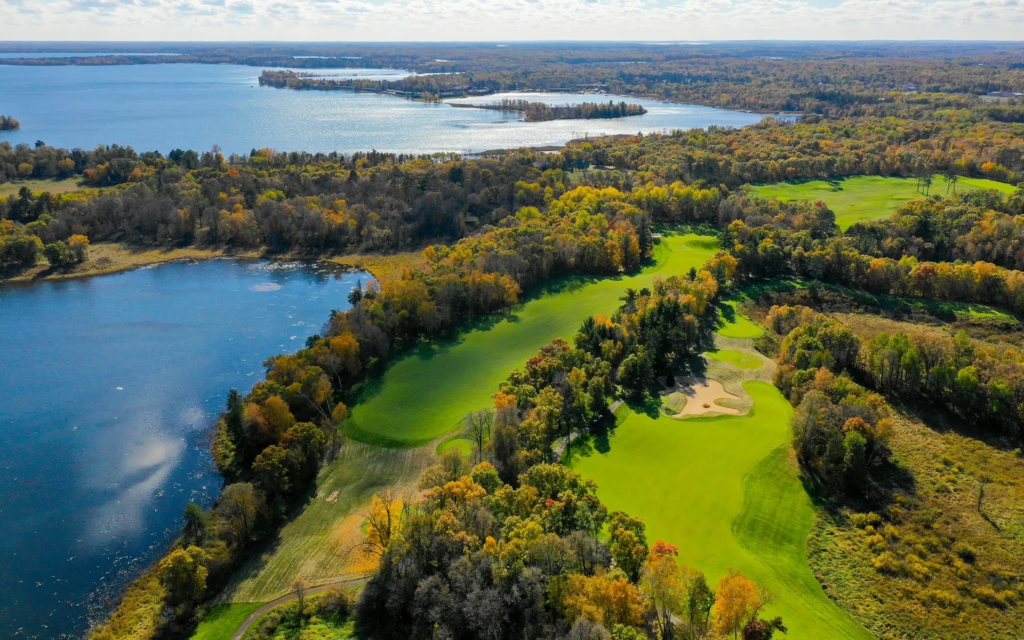
The Classic at Madden’s on Gull Lake
Upscale championship gem, ranked among the best new public courses nationally, with pristine conditions, strategic design, and Gull Lake scenery. Part of Madden’s 63-hole lineup; a must-play for serious golfers.

Legacy Courses at Cragun’s Resort (Dutch Legacy 27 + Lehman 18)
Modern masterpiece with PGA Tour pro Tom Lehman’s signature 18,stacked sod bunkers, wetlands, wooded sanctuary, and massive renovation/expansion. Dutch Legacy adds variety; 45+ holes total in one spot, rated among Midwest’s top.
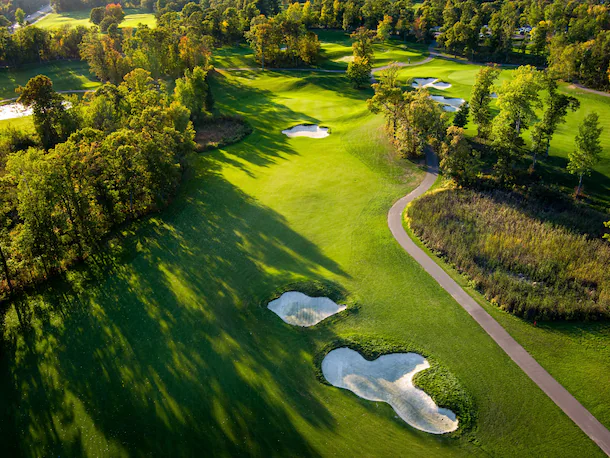
The Pines at Grand View Lodge (27 holes)
Joel Goldstrand design with Lakes, Woods, and Marsh nines, a true “player’s course” with challenging variety, blind shots, water, and Northwoods beauty. Highly ranked in state lists; renovated for top conditions.

Pine Beach East at Madden’s on Gull Lake
Historic classic (opened 1926) with Minnesota’s only par-6 hole (over 600 yards!) scenic, enjoyable, and full of character alongside the more modern options.

Great Stay-and-Play Resorts & Spots
- Madden’s on Gull Lake: Classic resort with 63 holes, lakeside lodging, spa, marina, dining
- Cragun’s Resort on Gull Lake: Mile-long beach, Legacy Courses, pools, sports center, cabins/hotel
- Breezy Point Resort: Deacon’s Lodge access, multiple courses, vacation homes/condos
- Grand View Lodge: The Pines & Preserve courses, family amenities, cabins
- Packages include lodging, rounds, carts, breakfast, book direct or via Brainerd Golf Trail sites
All Key Brainerd Golf Courses at a Glance
- Deacon’s Lodge (Arnold Palmer design)
- The Classic at Madden’s
- Legacy Courses at Cragun’s (Lehman 18 + Dutch Legacy)
- The Pines at Grand View Lodge (27 holes)
- Pine Beach East/West at Madden’s
- Whitebirch at Breezy Point
- Plus short courses, par-3s, and nearby gems like Ruttger’s
Pro Tips
- Book stay-and-play packages early via resort sites (maddens.com, craguns.com, breezypointresort.com, grandviewlodge.com) or brainerdgolftrail.com, multi-course deals save big
- Fly into Brainerd Lakes Regional (BRD) for closest access, or Minneapolis (MSP) 2-3 hour drive
- Pair golf with Brainerd classics: fresh walleye, craft beer, lake cruises, or fall colors
- Use carts for terrain; forward tees for fun; caddies or GPS for strategy on tougher tracks
Get yourself to Brainerd you won’t regret it,
Jesse


