Does putting a line on your golf ball help you make more putts?
Ask Brad Faxon.
According to Titleist, Faxon was one of the first Tour players to draw a line on his golf ball back in the day. The idea was simple: give yourself a clearer visual target, aim the ball more consistently, and start more putts on the line you actually picked.
“Titleist Brand Ambassador Brad Faxon is credited with being the first tour player to hand-draw a line on his golf ball. Brad marked a straight line on his Titleist to help him aim the ball, orient his putter face and body lines correctly and get his ball started on the correct line. This practice helped Brad to become one of, if not the best putter on the planet.”
Seems like it worked for him.
But what about the rest of us?
That’s where things get interesting. Some golfers swear a line on the ball instantly improves their aim. Others think it’s distracting, slow, or just another gimmick. Meanwhile, golf ball companies have gone all-in on alignment tech, from Callaway Triple Track to Titleist’s new AIM models to Wilson, Srixon, Vice, and more.
So, does the line actually help?
Here’s the five-minute version covering what golfers are arguing about on Reddit, X, YouTube, and at the range.
Callaway Triple Track Still Runs The Show

The OG.
Callaway’s Triple Track system is still the most recognizable alignment-ball setup in golf. You’ll find it on the Chrome Tour, Chrome Soft, ERC Soft, and newer 360° versions.
The appeal is obvious: instead of guessing whether your ball is aimed correctly, you get three bold lines designed to frame your target and help you square the putter face.
Golfers use it for more than putting, too. Plenty of players line it up on tee shots to help commit to a start line before pulling the trigger.
Why golfers like it:
- Easy to see behind the ball
- Helps with putter-face alignment
- Works on putts and tee shots
- Built into premium Callaway models
MyGolfSpy’s 2025 ball test and Today’s Golfer’s robot testing both reinforced the bigger point: alignment tech does not need to come with a meaningful performance penalty. If you like the visual, there’s not much downside.
Check out Callaway Triple Track here.
Titleist Finally Said, “Fine, We’ll Play”
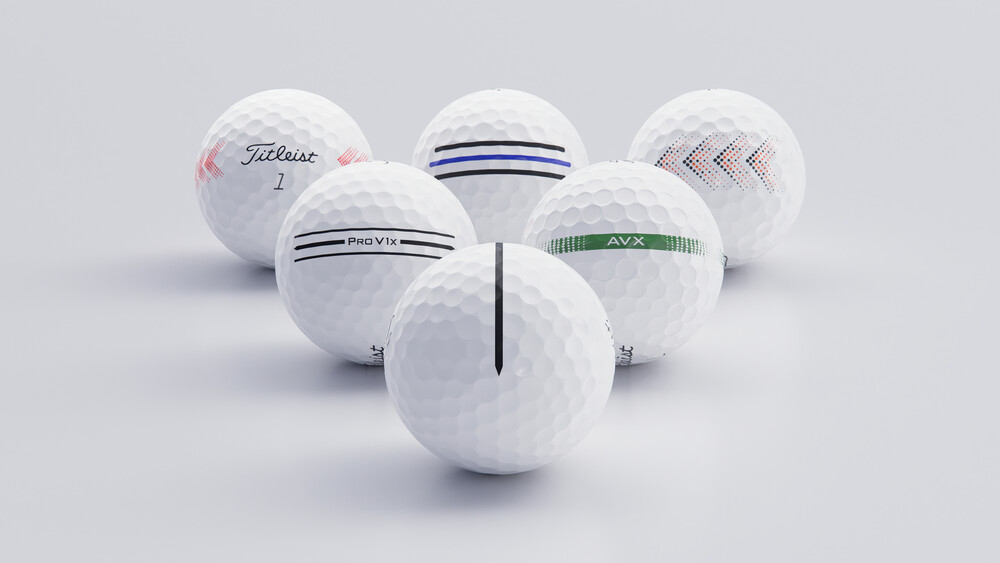
For years, Titleist players had two choices: play a clean Pro V1 or grab a Sharpie and draw the line yourself.
That has changed.
Their full lineup is now available with factory Performance Alignment markings, including the newer Enhanced Alignment version.
It’s a more subtle look than Triple Track, but that’s exactly why a lot of Titleist players like it. You get the clean Pro V1 feel with just enough help when you’re standing over a six-footer.
Why golfers like it:
- Cleaner look than louder alignment balls
- No Sharpie or stencil needed
- Available on Pro V1 and Pro V1x
- Feels familiar for longtime Titleist players
Titleist held out for a while, but the message is clear now: alignment balls are no longer just a niche thing.
Explore Titleist Golf Balls Here
Everyone Else Is In The Mix

Callaway and Titleist get most of the attention, but they are not the only brands leaning into alignment.
Bridgestone Mindset: These balls have won on TOUR twice already in 2026.
Wilson Triad: The newer Triad models have picked up attention for combining alignment help with strong balance and performance. Golfalot and plenty of social media golfers have called it one of the surprise performers.
Srixon Q-Star: Srixon’s visual alignment options give golfers a bolder look without going full Triple Track.
Vice Tracer: Vice Tracer balls have become popular with golfers who want bright alignment markings that are easy to see over the ball.
In other words, you’re not stuck with one brand or one look anymore. Whether you want loud, subtle, colorful, or clean, there’s probably an alignment ball that fits your eye.
The Great Reddit And X Debate
This is where the line-on-the-ball conversation gets messy.
Some golfers say it immediately helps them aim better. They feel more confident, make a better stroke, and stop second-guessing whether the putter face is pointed where they think it is.
Others hate it.
They say it takes too long to line up, looks distracting at address, or makes them obsess over aim instead of speed. A few golfers try it for a round, get annoyed, and go right back to a plain white ball.
The split usually comes down to one thing: do you struggle with aim?
If you do, a line can help. If you already aim well and prefer a cleaner look, you may not notice much benefit.
Bottom line: if your start line is a problem, the line is worth trying. If your speed control is the real issue, no alignment marking is going to magically fix that.
So, Does A Line On Your Golf Ball Actually Help?
For a lot of golfers, yes.
Not because the line makes the ball roll better. Not because it turns a bad stroke into a good one. And definitely not because it guarantees you’re suddenly going to become Brad Faxon.
It helps because it gives your eyes a simple reference point.
When you line the ball up with your intended start line, you can step in, set the putter face, and make a stroke with a little more confidence. That matters, especially on short and mid-range putts where doubt can wreck you before the putter even moves.
The line can also expose a problem. If the ball looks aimed correctly from behind but wrong when you stand over it, that tells you something about your setup, eyes, posture, or perception.
That alone can be useful.
For Titleist this is a foregone conclusion.
The findings were undeniable. The results of the test showed that players were consistently up to 35% more precise in aligning their putts when they used an AIM product.
Big OEMs still run the show… but if you’ve been paying attention lately, the gear nerds are winning.
Somewhere between launch monitors, TikTok fittings, and Tour players quietly switching into weird-looking putters…
Boutique club makers went from niche → mainstream.
The Brands Everyone’s Whispering About
A few names keep popping up in fittings, forums, and even Tour bags:
-
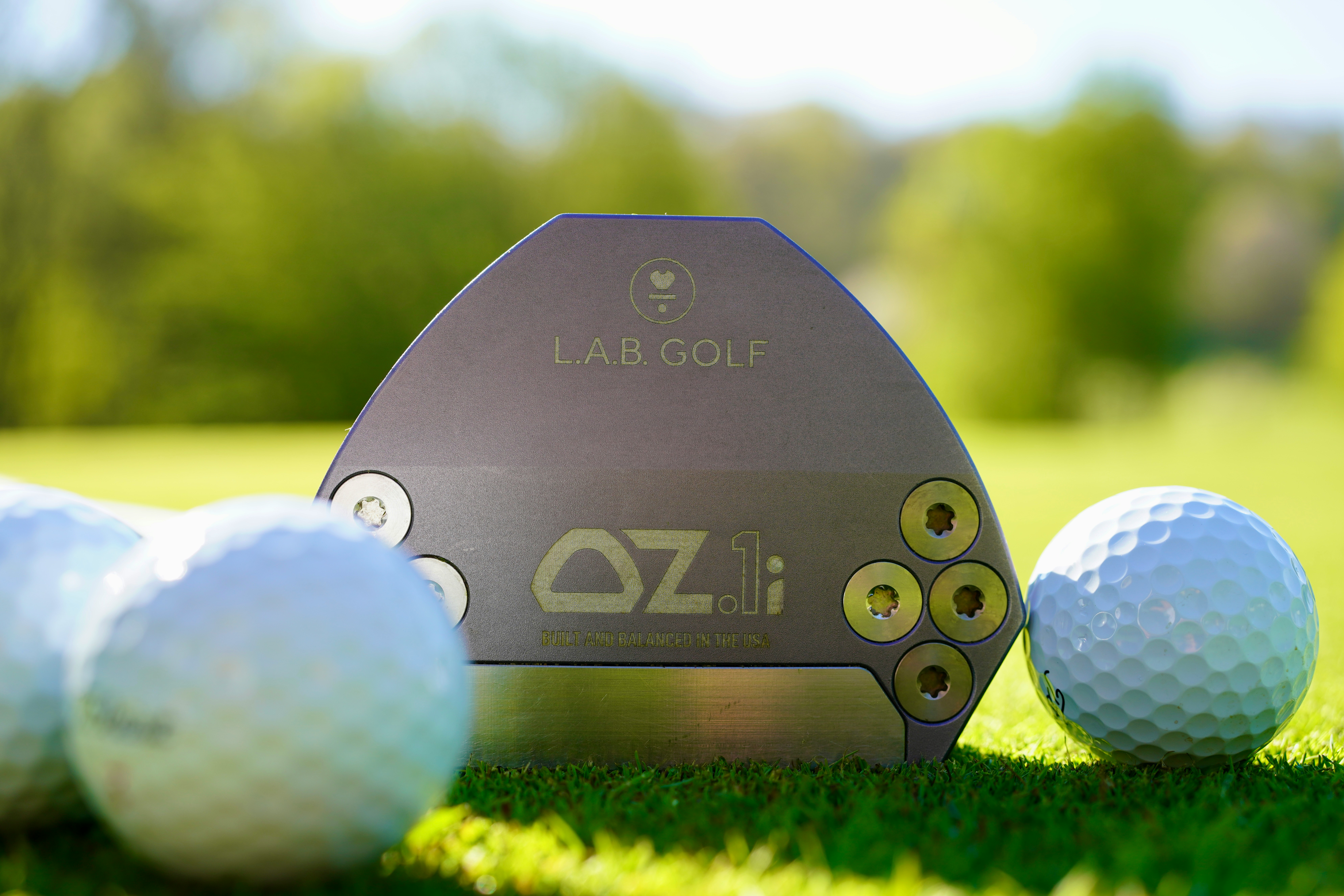
L.A.B. Golf → Lie Angle Balance tech = zero torque putting
-
Grindworks → Japanese forging + precision wedge grinds
-
Artisan / boutique wedge makers → fully custom soles, bounce, and shaping
These aren’t mass-produced clubs – they’re engineered solutions for specific swings.
Why This Is Happening Now
This isn’t random. It’s the perfect storm:
1. Launch monitor culture exploded
TrackMan, Foresight, GCQuad—everyone now has data. Golfers can prove what works, not just guess.
2. Fitting > off-the-rack
The biggest shift in golf equipment over the last 5 years: Buying clubs without a fitting now feels… reckless. Boutique brands thrive here because they’re built for customization from day one.
3. Tour validation changed everything
When pros started quietly gaming non-OEM gear:
-
L.A.B. putters showing up on Tour
-
Custom wedges replacing stock grinds
That was the signal: Performance > brand loyalty

L.A.B. Golf: The Putter That Broke the Internet
Let’s talk about the elephant in the room – yes, they look insane…
But:
-
Lie Angle Balance = eliminates torque during stroke
-
Face stays square without manipulation
-
Tour adoption is rising fast
The wild part: Golfers are choosing function over aesthetics for maybe the first time ever.
Grindworks & The Japanese Craftsmanship Wave
If L.A.B. is about innovation… Grindworks is about perfection.
-
Ultra-premium forging techniques
-
Soft feel + tight tolerances
-
Custom grinds tailored to turf + swing
This is where golf starts to feel like luxury craftsmanship, not retail.
The Real Trend: Hyper-Customization

Not just:
-
shaft flex
But:
-
shaft profile
-
swing weight
-
lie/loft tweaks
-
grip build-up
-
wedge grind geometry
Every variable is now adjustable—and boutique brands lean into that.
Yes, It’s Expensive… But That’s the Point
Let’s be honest:
-
Boutique wedges: $250–$400+
-
Custom putters: $400–$800+
-
Fully built iron sets: 💀
But golfers are starting to think differently: “Why spend $600 on a driver every year… when you can dial in a set for 5+ years?”
The mindset is shifting from consumption → optimization

OEM vs Boutique: Who Wins?
Big Brands (TaylorMade, Titleist, etc.)
-
R&D power
-
Tour presence
-
Forgiveness + scalability
Boutique Makers
-
Customization
-
Craftsmanship
-
Niche performance advantages
The future isn’t one replacing the other…
It’s blended bags:
-
OEM driver
-
Boutique wedges
-
Specialty putter
-
Custom-fit everything
The Caddyshanks Take
This isn’t a trend—it’s a philosophy shift. Golf used to be: “What clubs should I buy?”
Now it’s: “What clubs are built for my swing?”
And boutique makers are winning because they answer that question better than anyone.
Five years ago, showing up with a weird-looking putter or off-brand wedges felt risky. Now?
It feels like you know something other people don’t. And in 2026 golf culture…that’s kind of the whole point.

Deal #1 – $50 OFF PGA Super Store

Use code SAVE50 at checkout to take $50 OFF any cart of $250 or more.
This applies site-wide.


